
Kerala, often called God’s Own Country, is celebrated for its lush landscapes, vibrant traditions, and architectural heritage that spans centuries. From ancient temples to colonial forts and royal palaces, every structure tells a story of craftsmanship and cultural evolution.
But while these monuments have stood the test of time, they also face the challenges of age, weather, and modernization pressures. Traditional methods of conservation have been successful in many cases, but the future calls for a digital layer of preservation. This is where Building Information Modeling (BIM), and more specifically Historic Building Information Modeling (HBIM), can make a transformative impact.
The Traditional Way: Conservation of Vadakkunnathan Temple
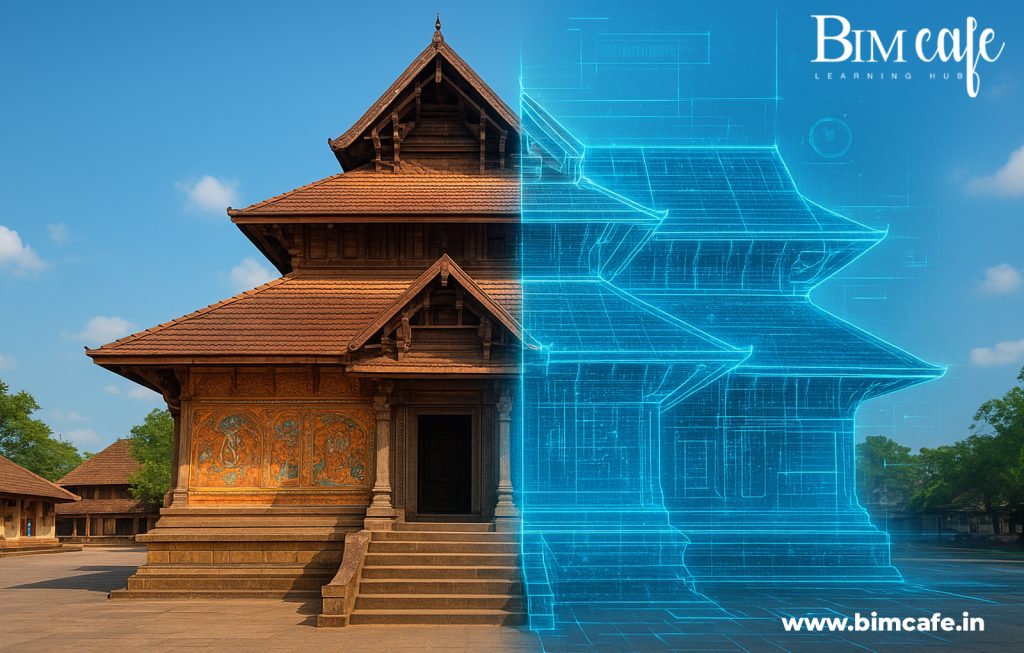
The Vadakkunnathan Temple in Thrissur is one of Kerala’s most iconic monuments. Recognized by UNESCO, this temple is a marvel of Kerala-style architecture with its towering gopurams, wooden roofs, and intricate mural paintings.
When conservation was undertaken a few years ago, experts used:
- Non-destructive methods to protect the structural authenticity.
- Indigenous materials and techniques to ensure cultural continuity.
- Careful restoration practices that respected the sanctity of the site.
The project was lauded worldwide. However, there was no BIM or digital documentation involved. While the temple was restored, there is no detailed 3D digital twin or structured database available to guide future conservation work.This raises an important question: What if BIM had been applied?
Imagine the Possibilities: BIM in Heritage Conservation
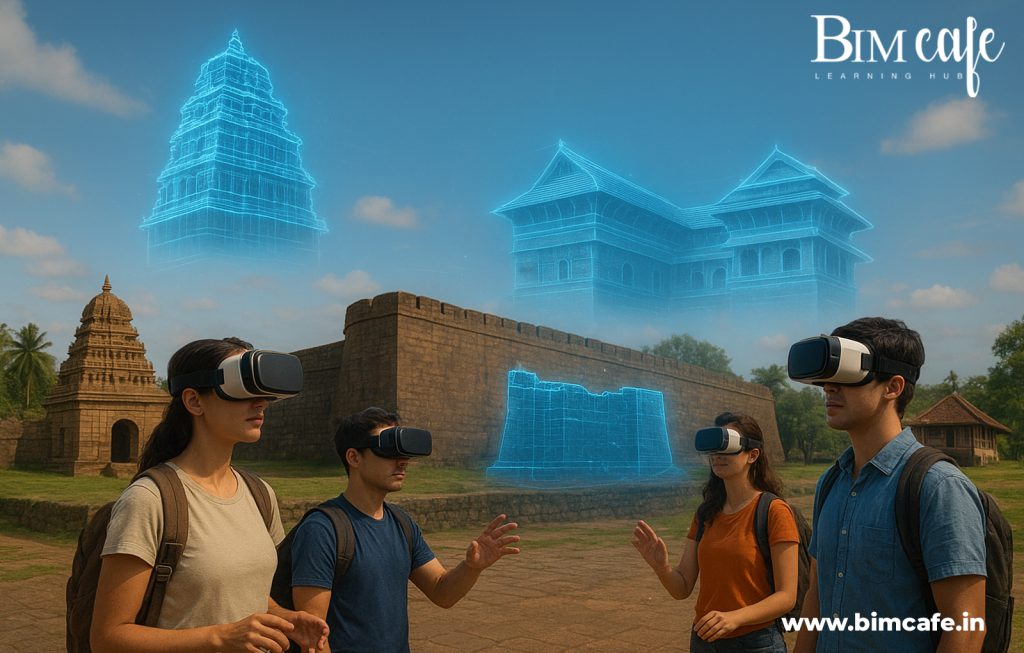
BIM is often associated with modern skyscrapers and infrastructure projects. But in recent years, HBIM (Historic BIM) has been gaining ground internationally as a method to preserve heritage sites. Here’s how applying BIM to heritage in Kerala could reshape conservation:
1. Creating Digital Twins
Every pillar, mural, and stone base can be digitally scanned and modeled into a 3D BIM environment. This creates a permanent, sharable record of the monument.
2. Predictive Maintenance
BIM enables simulations of how materials will age over time, factoring in climate, usage, and erosion. This allows authorities to plan preventive measures rather than reactive repairs.
3. Disaster Management
With a digital model in place, recovery after natural disasters like floods or earthquakes becomes faster and more precise. The model acts as a blueprint for reconstruction.
4. Academic & Tourism Value
Digital twins can be used for virtual tourism, AR/VR experiences, and global academic research, opening Kerala’s heritage to a wider audience without physical wear and tear.
5. Cost-Efficient Conservation
By predicting issues and planning restoration in a digital space first, costs are reduced and interventions are more precise.
A Future Example: Kannur’s Heritage Sites
While Thrissur’s Vadakkunnathan Temple illustrates the past, Kannur offers a future canvas for BIM adoption. Two heritage sites stand out:
St. Angelo Fort (1505 CE)
Built by the Portuguese and later occupied by the Dutch and British, St. Angelo Fort guards Kannur’s coastline. Constantly battered by sea winds and erosion, the fort faces a high risk of structural weakening.
- BIM could simulate coastal erosion and salt damage, helping engineers design protective measures.
- HBIM models could preserve the fort’s unique bastions and defense structures for digital records.
- Virtual models could enhance tourism experiences, showing visitors how the fort evolved under different colonial rulers.
Arakkal Palace
The Arakkal Palace in Kannur is Kerala’s only royal residence of a Muslim dynasty. It blends local styles with Indo-Arabic influences but suffers from weathering and neglect.
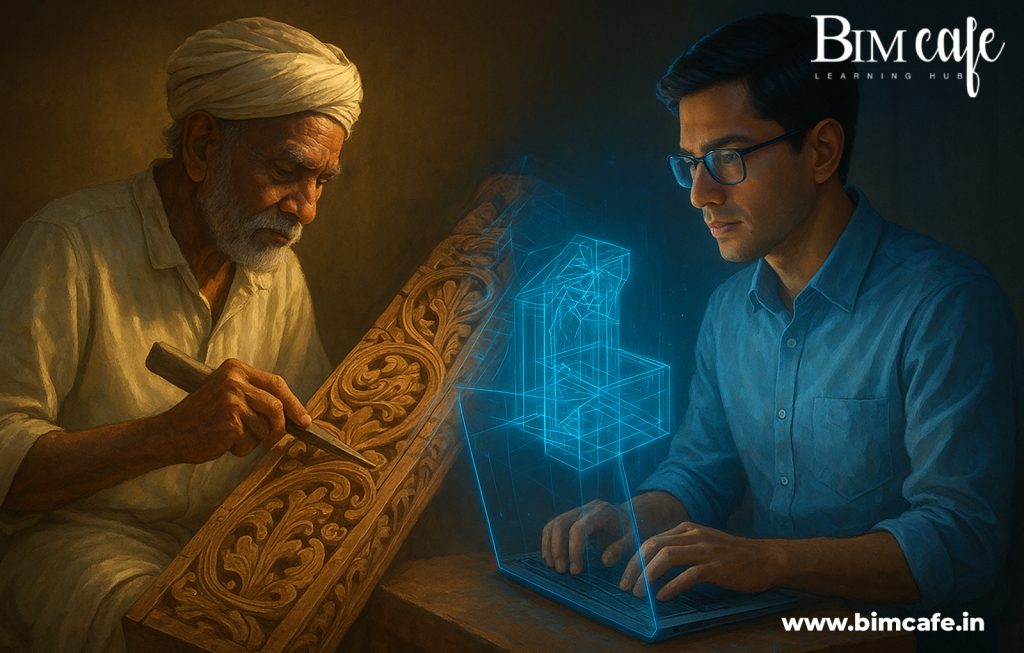
- HBIM could digitally preserve intricate wooden carvings and archways.
- The model could guide authentic restoration work without losing original detailing.
Virtual walkthroughs could help showcase Kerala’s diverse cultural history to tourists and researchers alike.
Why Kerala Should Lead in HBIM Adoption
Kerala has already made waves with initiatives like the Muziris Heritage Project, which successfully restored multiple historic sites. Introducing BIM in heritage conservation would:
- Position Kerala as a pioneer in India’s digital heritage movement.
- Enable cross-disciplinary collaboration between archaeologists, architects, engineers, and technologists.
- Strengthen Kerala’s reputation in global tourism and academic research.
- Ensure that future generations inherit not just the monuments, but also the data to preserve them.
Challenges and Opportunities
Like any innovation, introducing BIM into heritage conservation comes with challenges:
- High cost of laser scanning and modeling for large monuments.
- Need for specialized HBIM experts who understand both technology and traditional architecture.
- Possible resistance from traditional conservationists who rely solely on indigenous methods.
But the opportunities outweigh the challenges. With government support, academic partnerships, and BIM adoption hubs like BIM Cafe Learning Hub, Kerala could become a model state for heritage-focused BIM implementation.
Merging Tradition and Technology
The conservation of Vadakkunnathan Temple shows how Kerala’s heritage can be protected with traditional wisdom. But imagine combining those techniques with digital precision through BIM. The result would be a future where every temple, fort, and palace in Kerala is not just restored physically, but immortalized digitally.
By applying BIM to Kannur’s St. Angelo Fort and Arakkal Palace, Kerala has a chance to lead India into a new era of digital heritage conservation—where history is not only preserved but also reimagined for the world.
The time is ripe for Kerala to move from traditional conservation to tech-enabled preservation, ensuring that the past lives on, seamlessly connected to the future.